Bouncy Marker Typeface for Playful Editorial Design
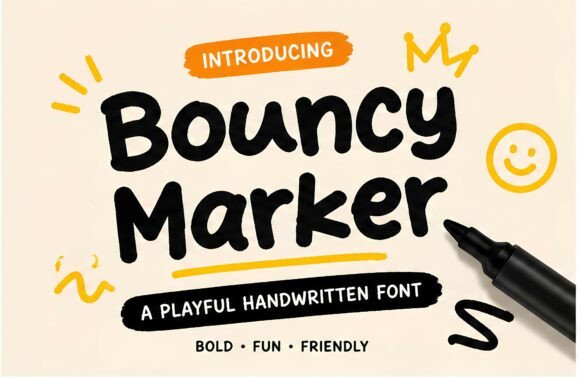
I was sitting at my desk last Tuesday, staring at a blank Figma canvas, trying to find the right voice for a new coaching workbook. The content was serious—deep dives into productivity and mental clarity—but I wanted the packaging to feel approachable, warm, and human. That is when I decided to test Bouncy Marker, a playful handwritten font with a bold marker look and cheerful personality. It wasn’t just about picking a typeface; it was about finding a visual rhythm that could soften the edges of complex information without sacrificing authority.
As an editorial designer who spends hours tweaking kerning and line heights, I know that font choice dictates the entire reading experience. This font has rounded, bouncy, and friendly letter shapes that make every design feel fun, casual, and creative. In this article, I will walk you through how I integrated this Script Handwritten style into a real-world layout project, discussing its strengths, limitations, and the specific moments where it shines brightest in modern digital publishing.
Bouncy Marker for Lifestyle Blog Headers and Brand Identity
When I first opened the Bouncy Marker file, the immediate impression was one of unapologetic joy. Unlike rigid geometric sans-serifs or overly formal serifs, this display font carries a distinct hand-drawn energy that feels authentic rather than manufactured. For bloggers and independent publishers, establishing a recognizable brand identity quickly is crucial. Using Bouncy Marker as a primary header font can instantly signal to your audience that your content is personal, accessible, and perhaps a bit unconventional.
In my testing, I applied the font to a lifestyle blog redesign focused on home organization. The goal was to move away from sterile, corporate aesthetics toward something that felt like a friend giving advice. The bold marker look provides enough visual weight to compete with photography and illustrations, ensuring that titles grab attention in crowded social media feeds. However, because these fonts are primarily decorative, I found that they work best when used sparingly. A single line of text as a hero headline creates impact, whereas using it for navigation menus or footers can create visual clutter that distracts from the core message.
Bouncy Marker in Recipe Ebooks and Printable Guides
One of the most compelling use cases for Bouncy Marker emerged when I began designing a recipe ebook. Food blogging is a saturated market, and visual appeal is often the deciding factor for downloads. The rounded, bouncy, and friendly letter shapes of this typeface evoke the feeling of a handwritten note passed between friends, which adds a layer of intimacy to the instructions. When paired with high-quality food photography, the font acts as a perfect frame, drawing the eye to the title without overpowering the image.
I experimented with different weights and styles included in the package. While the standard weight was sufficient for chapter titles, I discovered that the alternate characters and ligatures added a unique flair to ingredient lists and pull quotes. For printable guides, such as meal planners or shopping lists, the legibility remains surprisingly high despite the stylized nature of the letters. The key here is contrast. By pairing Bouncy Marker with a clean, neutral sans serif font for body copy and measurements, I created a hierarchy that allowed readers to scan the page easily. The script font handles the emotional hook, while the functional font handles the data.
Bouncy Marker for Wedding Invitations and Digital Magazines
The versatility of Bouncy Marker extends beyond blogs and ebooks into more formal, yet still personal, territories like wedding invitations and digital magazine covers. Traditionally, wedding typography leans heavily towards elegant calligraphy or classic serifs. However, modern couples are increasingly seeking designs that reflect their unique personalities. This font offers a middle ground: it is polished enough for a formal event but retains a youthful, energetic vibe that appeals to younger demographics.
In a recent project for a digital magazine feature on sustainable living, I used Bouncy Marker for section headings. The magazine’s overall tone was informative but urgent. The bold marker look provided a sense of immediacy and emphasis that standard fonts lacked. It helped break up long-form articles, guiding the reader’s eye through the content with natural pauses. Because the font has a cheerful personality, it prevented the serious subject matter from feeling too heavy or academic. This demonstrates how thoughtful font pairing can influence the perceived mood of an entire publication.
Readability Considerations for Screen and Print
While Bouncy Marker is undeniably attractive, it is essential to approach its usage with technical precision. As a script font, it is not designed for long-form body text. Attempting to read paragraphs set entirely in this typeface would lead to eye strain and reduced comprehension rates, particularly on mobile devices where screen real estate is limited. My testing confirmed that the optimal strategy is to reserve the font for short bursts of text: titles, subtitles, buttons, and decorative accents.
For mobile layouts, I paid close attention to sizing. Because the letterforms are rounded and somewhat thick, reducing the font size too much can cause the letters to merge, making them illegible. I found that keeping headers at a minimum of 32 pixels ensured clarity across all device sizes. Additionally, when exporting to PDF for print materials like worksheets or planners, I checked the vector quality of the glyphs. The lines remained crisp and smooth, indicating that the font files are well-constructed for high-resolution output. This is critical for creators selling digital products, where poor rendering can damage professional credibility.
Practical Font Pairing and Licensing Details
Successful editorial design relies on harmony. To balance the whimsical nature of Bouncy Marker, I recommend pairing it with a highly readable serif font for body copy. The organic curves of the script complement the structured elegance of a serif, creating a sophisticated yet approachable aesthetic. Alternatively, a geometric sans serif can provide a modern, minimalist backdrop that lets the marker font pop as the focal point. Avoid pairing it with other decorative scripts, as this competes for attention and dilutes the brand message.
Before incorporating Bouncy Marker into commercial projects, it is vital to review the licensing agreement. Most premium fonts come with specific terms regarding how many end-products you can distribute, whether for free or for sale. Ensure that the license covers your intended use cases, such as embedding the font in PDFs, using it in video content, or applying it to merchandise. Understanding these details protects your business and respects the creator’s intellectual property. By choosing a licensed, high-quality typeface, you invest in the professionalism and longevity of your brand identity.
Bouncy Marker for Course Materials and Educational Content
Finally, I explored the potential of Bouncy Marker in online course materials and educational PDFs. Education can often feel dry or intimidating, especially for beginners. Introducing a font with a cheerful personality can lower anxiety and encourage engagement. I used the font to highlight key takeaways and module titles in a coaching course. The result was a learning environment that felt supportive and encouraging. Students were more likely to return to the material because the visual design felt less like a textbook and more like a conversation.
This application highlights the power of typography in shaping user experience. It is not merely about decoration; it is about communication. Bouncy Marker communicates warmth, creativity, and accessibility. Whether you are designing a newsletter graphic, a book cover, or a social media campaign, this font offers a distinctive voice that stands out in a sea of generic templates. By integrating it thoughtfully into your workflow, you can elevate your editorial design from functional to memorable.